Tag Archives: Slowing Down

New Book Helps Families Slow Down

Many of us want more joy and connection in our family and daily lives. We often don’t quite know how to achieve those things, and the process of even beginning to do so can seem daunting. Enter Slow Family Living: 75 Simple Ways to Slow Down, Connect, and Create More Joy, the beautiful new book from Slow Family Living co-founder Bernadette Noll.

Just reading Bernadette’s book makes me feel calm and confident that I can make the small changes necessary to have a more fulfilling family life. Her voice is reasoned and experienced, and her suggestions are each presented in short chapters that describe an activity or practice that can result in greater family closeness. The first step, according to Bernadette? Ask yourself and your family:

Is this working for us?

So often, in family life, we do things because they’ve been declared a “tradition” (Bernadette offers a funny tale about this), or because we feel obligated to take on an activity or do something the standard way. Once you’ve determined whether something is working or not, you can set about changing what needs to be changed.
The activities in the book range from practices like pausing, expressing appreciation, active listening, and letting weekends be half-full, to ideas for keeping family life fun like spontaneous game nights, family journals and billboards, lemonade stands, and making stuff together, which is the title and topic of Bernadette’s fantastic first book about art as a means of expression, fun and family and community bonding.

Community bonds also figure in this book, and I love the ideas for slowing as a community by having dinners together and playing sports together, as alternatives to every-family-for-themselves, on one hand, and over-organized league sports, on the other. In both cases, Bernadette illustrates how her community came together to provide something richer, and more fun, than the traditional offerings did. The community dinners involved various children and families in a novel way. The family “sports league” alleviated excess driving to various sports events for different members of the family and provided space for everyone to play together, adults included.

You will get a lot of ideas from Slow Family Living, both big-picture and everyday, that will make you pause and reflect, and will help you lead a more connected and joyful family life.

You might also be interested in:

Make Stuff Together, 24 Simple Projects to Create as a Family
The Blessings of a Slow Family
Playborhood: Turn Your Neighborhood into a Place for Play
Fed Up with Frenzy: Slow Parenting in a Fast-Moving World

Empty Calendar, Full Days

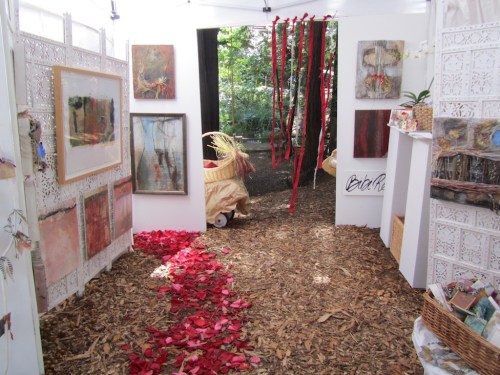
Last weekend, we experienced one of the rarest of occurrences. There was not a thing on our family calendar. The coming weekend spread before us on paper, a completely blank pair of days. There were a couple of things we thought we might do. The annual Fall Arts Festival would be in our town, an unusually lovely art show with fine artists’ booths that wind along a path in a redwood grove. The Jewish New Year began Sunday night, and I knew I wanted to cook a special meal. But unusually, we had all of the two days and nights to leisurely do those things and whatever else struck us.

We rode bikes to the art show fairly early on Saturday. We immediately saw good friends and beautiful art and artists, some of which also appeared as old friends, as they’ve been happy fixtures at the Festival since we started attending 20 years ago, the very weekend we first moved to Mill Valley. The grove had the moist redwood-duff smell that I’ll always strongly associate with my first days here. Still other Festival memories? Being seven months pregnant and buying a backpack of books at the adjoining library sale and laughing that they were balancing me front to back, and taking Anna to the Festival the next year when she was almost a year old. (This picture was taken that day.)

This weekend, we joined younger families in taking in a sweet and magical marionette show (its qualities only enhanced by being performed in what is known as the “fairy ring” of redwoods). I marveled at how very enraptured and still the audience of small children was as they sat on their tarp and on tree stumps. Other talented friends of ours, father and daughter Austin and Caroline de Lone, sang and played a variety of instruments through a fabulous set to which other of our friends wandered over, lured by the beautiful music. We saw more friends and got into long, deep discussions under the trees.

The looseness of the day called for meandering. There was a bliss to the spontaneity and complete lack of schedule. We didn’t have to be anywhere else, then or later. Still later, we ran into another friend while buying food for a simple dinner and ended up inviting her over. This so rarely happens — people call first and plan and shoehorn events into busy schedules far in the future. And yet the way the whole day played out struck me as the way things are supposed to be. This certainly seemed like a way to build community, by taking the time to stop and engage with people we meet in our daily travels.


Sunday brought more relaxation. We read. Anna did homework and worked on her essays for college. We leisurely planned dinner and I went shopping and later made two of my favorite dishes, Chicken Marbella and honey spice cake. Michael made mashed potatoes. At one point Anna called our attention to colorful oak leaves that were falling and swirling in the wind outside, and we all talked about how much it looked and felt like Fall.

At dinner we talked about the New Year and the big change to come of college. We dipped apples in honey to signify a sweet new year. We lingered at the table an especially long time, precisely because we had time. We even cleaned up in a leisurely way.

While many people relish an empty calendar, still others are afraid when confronted with one. Both of these extremes should tell us something. Lots of us are so conditioned to being booked up that free time is a rarity, and sometimes even a burden. This weekend showed me that an empty calendar can result in exceedingly full and rich days.

Photos by Susan Sachs Lipman


Slow News: Discovering the Joy of Quiet

It seems many of us are taking time for contemplation and looking inward – or we wish to. The turning of the year could have much to do with this, as we use the marker of time to take stock, begin anew, and resolve to create more of the things we desire in life. It’s also winter in the Northern Hemisphere, a traditional time for many to embrace stillness and rest in a way that mirrors nature. And, if that weren’t enough, it’s the end of the holiday season, which can also signal a return to routine and calm.

But there’s also something else at work.

Pico Iyer tells us, in his New York Times piece The Joy of Quiet, that people are so desperate to get away from the din of information and chaotic lives that the future of travel “lies in ‘black-hole resorts,” which charge high prices precisely because they are internet- and television-free.

In barely one generation we’ve moved from exulting in the time-saving devices that have so expanded our lives to trying to get away from them — often in order to make more time. The more ways we have to connect, the more many of us seem desperate to unplug. Like teenagers, we appear to have gone from knowing nothing about the world to knowing too much all but overnight.

Iyer notes that “the urgency of slowing down is nothing new”, but perhaps these latest trends point to the fact that, while the desire to slow down is not new, the urgency and the need to do so has increased. The frenzy of modern life and 24/7 communications has stretched many to the limit, and families and others are seeking techniques – be they “black hole resorts”, electronic-free days, or turning down team sports and birthday party invitations – to regain a sense of sanity, necessary down-time and quiet.

The good news is that you needn’t completely check out of life and into an expensive resort or an ascetic ashram.

Make a pledge to slow down as a family by turning off the electronics for one or more evenings a week and playing cards or classic board games.

Get out in nature together. Power of Slow author Christine Louise Hohlbaum offers some ideas.

Do a family craft or cooking project:

Whatever you do, try to bring your whole mind to the endeavor. Enjoy your family and time.

Photos: Susan Sachs Lipman

You might also like:

Slow Family Online:

New Year’s Resolution: Spend More Time in Nature
Slow Parenting Gaining Steam: It’s About Time
Coming Next Summer: Fed Up With Frenzy: Slow Parenting in a Fast-Moving World

New York Times:

Disruptions: Resolved in 2012: To Enjoy the View Without Help From an iPhone


Honoring Birthdays

My family, like many, has always placed a great importance on birthdays. After all, that’s the day to celebrate a person’s actual birth, their very existence on the planet. By celebrating a person, we revel in the richness they contribute to our family and community life. We also mark the milestone by celebrating the birthday person’s life, their achievements and aspirations, perhaps even their birth story. Birthdays, even if shared within a family or circle, are still fairly unique. Each one gets his or her chance to shine on their individual day.

We always mark the precise day and time on our daughter Anna’s birth, and that moment has special power for us. Because Anna was born at 11:19 on a Saturday morning, we even often stop what we’re doing at 11:19 on Saturdays throughout the year. (This is a blessing of having a birth time when that is widely possible, as opposed to Thursday at 3 a.m.) We just make a simple note of that time – nothing more. We have all come to know that that is an expression of gratitude for Anna and even a little prayer for all the babies coming into the world at that moment. Now, in Anna’s teen years, this small gesture has survived as a shorthand.

Children at school or elsewhere on their birthdays can look at the clock and mark the exact time of their year turning, if possible. Of course, with numerous children, adopted children, busy lives and more or odder or less precise birth times, one may not be able to do this each week or even each year, and neither do we. It’s a nice gesture to remember and note the birthday moment or a token of it when possible. After all, what better birthday gift can there be than the knowledge that those around you are grateful for your existence?

Celebrations of both everyday and special occasions add rhythm and texture to family and community life. They allow people to gather for happy occasions and honor and celebrate a range of life passages, even some that may be challenging. They also allow individuals and families to punctuate time and mark passages for themselves, both publicly and in a way that carries over into ones internal life. Celebrations can lend power and blessings to events, and even moments, that help separate them from the everyday. Though modern life often ignores rites of passage that have been celebrated for millennia, birthday celebrations largely endure.

Once Anna went to school and I wasn’t always with her to mark her precise birth time, I began to try to pause on my own to reflect, and urged her to do so as well.  This year on her birthday, I had the joy of going for a neighborhood walk, on a break between rainstorms. I paused at 11:19 to enjoy shafts of autumn sunlight shining through these beautiful golden leaves and celebrate my radiant daughter.

Happy Birthday to celebrants all year and wherever you are.

Photos by Susan Sachs Lipman

Seeing at Child-Scale Helps us Slow Down, Appreciate More, and Play

What does it mean to be a child in a city, or anywhere? How does a child see things? Quite differently from adults, as it happens. This perspective might help many of us to slow down, appreciate more, and be more playful, as we orient to a child’s experience of scale.

The Hand-Made Play Collaborative in Tokyo (one of the busiest cities in the world) investigated how children enjoy and learn from non-commercial play, by telling  “one story of the everyday treasures of a rainy day walk“.

This is their map of a child’s experience of a city.

Children experience a great deal from the time within the pauses of activity, the research tells us. They like routine –  a small ritual within a routine walk can have great meaning. They learn by experiencing and experimenting, by noticing similarities and differences and moving things around. Adults tend to hurry kids, to grow impatient with their observations and not honor the way they experience time.

The main message from Hand-Made Play:

Slow Down. Stop and listen.

It can be a challenge to get out of our adult mindsets and concerns to do this. The rewards, however, are rich for both children and adults. Paying attention to child-scale could impact our actions and even our city planning. As usual, it is beneficial to try to see through the eyes of a child.

Images: Hand-Made Play

Thank you, Kerala Taylor of Kaboom, who first wrote about Hand-Made Play.

Slow News: Slow Family Movement Featured in USA Today

Slow Parenting is in the news again, as more and more parents are discovering that dialing back the amount of organized and scheduled activities for kids can lead to more family time and the sense of fun and calm that accompany it.

USA Today just featured the slow family movement, in an article that originally appeared in the Sioux Falls Argus Leader, and features my compatriots at Slow Family Living, Bernadette Noll and Carrie Contey, whose workshops, workbooks and wisdom have been helping families slow down.

The article shares the ways in which some families have chosen to slow down and their creative solutions for making family time fun, meaningful and a source of memories and bonding.

Much current research backs up the need for the kinds of free play and family togetherness that doesn’t happen when children are constantly engaged in organized activities. Some of this thinking comes from Dr. Kenneth Ginsburg, author of Building Resilience in Children and Teens, who assures us, “There are no more valuable means of promoting success and happiness in children than the tried, trusted, and traditional methods of play and family togetherness.”

Perhaps that’s something to think about as we enter the busy holiday season.

You might also be interested in:

Back to School: How to Tame Fall Frenzy
Coming Next Spring: Fed Up With Frenzy: Slow Parenting in a Fast-Moving World
Slow News: Movement to Restore Free Play Gains Momentum

A great source of research is:

The Children & Nature Network

Photo by Susan Sachs Lipman

Back to School: How to Tame Fall Frenzy

The flood of school-related papers seems to come earlier each year – the “first day” packets, the emergency and permission forms, the sports and other schedules. The start of school seems earlier, too — it’s up to mid-August in my neck of the woods.

A peruse around the internet shows that I’m not alone in feeling dismay at the loss of the long and leisurely summer. Parents in Chicago and Newburyport, MA, successfully lobbied their school districts to start school after Labor Day. Indiana senators are trying to mandate a statewide post-Labor Day start to school.

Hopefully, you were fortunate to have had some leisurely family time this summer. Or, at the very least, some time free from homework, schedules, transportation, meetings, appointments, a busy calendar and a frazzled household. No matter when Back-to-School hits for you, it can be a challenge and a desire to keep the pace and spirit of summer in your family. Here are a couple of ideas for taming Fall frenzy.

Create Unstructured Family Time

Consider turning down the occasional invitation or activity to ensure that your family has some time by itself. Then devote to that time by not answering the phone and emails, and putting away the electronics and the to-do list. Families need to regroup and simply have unstructured time together – to play, to talk, to inadvertently create the small instances that go into the family memory bank. It is the little things that tend to bond families, and these often occur during unstructured time. This can be time to explore a craft or make music, just for the fun of it – in contrast to being in “achievement mode”. It can be a time to have a family game night or be outside in nature, to tell stories that meander as you do, or to merely observe the world. In earlier cultures, it was more common for people to take a break from the everyday. Today, in our 24/7 world, we sometimes have to create that time for ourselves and our families, in order to refresh, as well as re-engage with one another. If need be, schedule a family night on the calendar.

Eat As Many Meals As Possible Together

You’ve heard it before, but it bears repeating. Mealtimes are often the only times families have together. It can be incredibly grounding to just sit down all together at the end of the day and share triumphs and thoughts. It can take some planning to find the time between activities and work for everyone to come together, as well as the time to plan and prepare meals. If you enjoy cooking, doing so as a family can provide fun bonding time. If not, aim to keep weeknight meals simple and buy what you need for a few meals at once, to keep cooking and shopping times down, as well as costs. You can also make double batches of food, and then have the leftovers the next night. Or pick up take-out food on your way back into the house. While home-cooked meals are great, the time spent together is even more vital.

Spend Time in Nature Together

Nature’s schedule is so much broader than our busy one, that one can’t help but gain a little perspective simply by being outside. And, chances are that when you’re outside as a family, you’re getting some fresh air, physical beauty and exercise, which enliven the spirit as well as help create healthy habits for everyone. For some children, nature is where they feel happiest, and there are plenty of ways to enhance their experience of nature, whether through creating poetry or art out of what is observed, collecting items to display at home, playing games like Tag and Hide ‘n Seek, building forts, watching stars, or telling stories and playing word games together while on walks. Other families might enjoy biking, rollerblading or water sports as a way to be active together and do something a bit special. Chances are, even if you live in a city, there’s a bit of nature nearby. Looking for ideas? Check out the Children & Nature Network.

Cultivate Friendships With All Different People

Have people in your life who are different ages than you, or whom you don’t know through your child. Sometimes what gets lost as a parent is a sense of who we are as people, and others – with whom me might share non-parenting interests – can help us reconnect with that part of ourselves and with a broader range of interests and ideas than may be prevalent in the immediate circle of school. People who don’t have school-age children may be less harried themselves, so that you can’t help but slow down in their presence. Perhaps there is a neighbor or friend with whom your family would enjoy taking a walk or doing a craft. Especially if there are no grandparents nearby, a relationship with someone older can be a wonderful, life-enlarging experience for a child. Many senior facilities welcome young visitors with a parent. Performing a service, such as visiting a shut-in, is an excellent way to slow down, gain perspective and make a friend.

Say “No” to More Things

We parents don’t have to volunteer to take on more at work, or to serve on every school committee that needs us. Periodically assess your needs and your output and, if something is out of balance, readjust. Likewise, children don’t have to sign up for a lot of activities. Often, children are over-scheduled to the point of creating stress for the whole family. Perhaps explore one or two activities at a time, and carefully consider costs and benefits before adding any new ones. It may help to assure yourself that it is usually not the last opportunity for your child to enjoy ballet or soccer. More pleasure may come from devotion to one thing at a time.

Evaluate Your Own Desires

Are you signing your child up for activities you would have liked for yourself? While exposure to many things is delightful and, indeed, a luxury, too much of a good thing can backfire. Try to be clear about whether your own needs or anxieties about your child’s achievement are fueling a desire to over-schedule activities. Often what children want, when asked, is simply more unstructured time with their siblings, friends or parents.

Make Time for Yourself and Your Spouse

This is often the first thing that gets bumped off the list of priorities. Adults who are burned out have no resources left for their children. Perhaps, having cleared more time for family time, some self and couple time can emerge as well. If need be, schedule time to spend alone, as a couple, or with friends from other parts of your life, even if you can only do so once a month. Consider doing more family activities that, while age-appropriate, are not necessarily child-focused. Sometimes children come along on our activities more readily than we expect them to, and the results can be rewarding for everyone.

Get Enough Sleep

Missing out on sleep puts everyone in a bad mood, which can add to daily stress. Try to have a regular bedtime for children and for yourself. If work remains to be done into the night, tell yourself it can wait until tomorrow. If there’s time, a nice routine before bed, such as reading out loud (to children of any age) can be calming and put a nice cap on the day, which helps everyone get to sleep better.

Let Children be Children

Sometimes, in our rush toward achievement, we forget what it is like to be a child. Childhood still lasts about 18 years, which leaves plenty of time for  structured activities. Some unstructured time for children (to be alone, as well as with the family) is desirable. Don’t be afraid to let your child have down time, to daydream or explore on his or her own. To even — be bored. Every activity doesn’t have to lead to a future goal. And every moment doesn’t have to provide outside entertainment. In fact, our tendency to over-schedule and over-stimulate children can create undue stress for them, as well as the inability to simply entertain themselves, play freely, tolerate stillness, or discover their own inner compasses — who they are and what they like to do.


Photos by Susan Sachs Lipman

Slow Down for Summer: Fun and Simple Outdoor and Seasonal Activities

I had such a great time on the Slow Down for Summer webinar that I did with KaBOOM! and with the many participants. We shared tons of Slow Summer ideas that emphasized fun and ease over equipment and preparation. These include old-school playground games that are ripe for a comeback and can be played most anywhere, crafts to get you outside on a nice summer day, activities to help kids observe and enjoy their surroundings (be they nature or city), and garden and harvest projects to help kids appreciate the cycles of nature and of life. There was so much information and so many wonderful ideas, that we just skimmed the surface in the time allotted. I think it got everyone thinking about the possibilities for wonder and fun and how to create more of each in their everyday lives. I know I came away with some great ideas!

You can visit the webinar anytime to get an idea of some of the things we discussed. And, of course, many of them can be found on my blog, on in future blog posts, as well as in my upcoming book, Fed up With Frenzy: Slow Parenting in a Fast-Moving World.

Enjoy your Slow Summer!

Photos by Susan Sachs Lipman

You might also like:

Make this Easy Tie Dye Project
Loom and Finger Weaving
11 Ways to Make Gardening Extra Fun for Kids
How to Save Nasturtium and Other Seeds
Blueberry Tuesday: Summer Triple Berry Crisp

Slow Down for Summer: Join me for a Webinar June 30th and Find out How

Yearn to slow down and fully enjoy summer? I will share lots of great ideas Thursday, June 30, 11 am Pacific Time, 2 pm Eastern Time in the U.S., in a Slow Down for Summer webinar hosted by KaBOOM!, an organization that supports play and helps communities erect great playspaces.

Games, crafts, activities, and more will be covered. You’ll come away with fun, simple and inexpensive ideas for making the most of your family time and the season.

In, addition, I’m giving away four signed copies of CEO Darell Hammond‘s New York Times bestseller, Kaboom: How One Man Built a Movement to Save Play. To enter in a random drawing for the books, leave a comment here about your favorite way to play (and let me know if you’d like to sign up for my email list) or sign up to receive occasional Slow Family email news in the right column of my blog and leave a comment here that you did. (If you’re already a subscriber, and you wish to be entered in the drawing, leave me a comment and let me know.) Entries are due by Midnight, Eastern Time. June 29th.

You can also register for the webinar in advance.

Happy Summer!

Photos by Susan Sachs Lipman

Coming Next Summer from Slow Family: “Fed Up With Frenzy: Slow Parenting in a Fast-Moving World”

Just announced! My book, based on the ideas in Slow Family Online, will be out next Summer from Sourcebooks. Titled Fed Up With Frenzy: Slow Parenting in a Fast-Moving World, it will contain resources for many of the craft, cooking, nature, seasonal, and other fun family activities you’ve enjoyed here, as well as tons of new ones. I hope to create a compendium of ideas and projects to help you have fun and make memories by slowing down, rediscovering lost arts from a simpler time, and re-connecting with yourselves and each another in the process.

Please come along as I continue to write about ways to slow down, find joy and reconnect. Please keep sharing your own ideas and thoughts as we continue to journey down the Slow Lane together!

This is the announcement that was in Publisher’s Marketplace. Thanks, everyone, for all your support. I’ll keep you posted on the book’s progress.

May 24, 2011
Non-fiction:
Parenting
Susan Sachs Lipman’s FED UP WITH FRENZY: Slow Parenting in a Fast-Moving World, a practical guide full of projects, activities, and games that will strengthen the parent-child bond, and help families reconnect, to Shana Drehs at Sourcebooks, by Andrea Somberg at Harvey Klinger.

Photos by Susan Sachs Lipman

Related Posts Plugin for WordPress, Blogger...