It was the apex of my childhood, over and over
–– inscription in a beach house guest book

For most families, summer is a season lasting approximately 12 weeks. Into it, we pack most of our relaxation for the year, along with our memories, our entertaining, and our sensual experiences –– whether they involve digging our toes into wet sand at the ocean’s edge or biting into a stack of mozzarella, tomato and basil, drizzled with olive oil, and swearing we can taste the Mediterranean.
It’s the season when the sun kisses our faces and causes our children’s height to spurt. It’s the season of wearing less clothing; spending more time with family and friends; eating fresh, tree-ripened fruit; and spending nights playing games or gazing at stars. In summer, time moves just a little more slowly.
When asked to name a childhood memory, most adults will remember an incident or a feeling from summer. While we can’t actually experience the golden season in December, there are a few fun and meaningful ways to harness the spirit of summer for our families to enjoy year-round.

Make Summer Food and Drinks
Many people associate the foods of summer with spots around the globe that bask in warm climates for much of the year. Think Mediterranean, Middle Eastern, African, Southeast Asian, South American, Mexican, Caribbean, Hawaiian, and regional U.S. dishes that use fresh fish, meats, cheese, vegetables, and herbs, and combine ingredients simply for results that are sensuous and robustly flavored. Cooking from warm climates is not only delicious, but can put you in a summer frame of mind any time of year. Try making Chicken Mole, Ratatouille, Easy Weeknight Fish Tacos, All Season Slaw or Pineapple Upside Down Cake. Recreate your favorite barbecue recipes that can be made in an oven or broiler. Roast marshmallows in a fireplace or over a stove flame for s’mores.
Or make the yummy Mango Lassi (instructions at the bottom of this post.)
Camp in Your Living Room
Camping in sleeping bags is fun any time of year, indoors or out. Rustle up some s’mores in a fireplace or over an oven flame. Sing your favorite campfire songs. Tell stories. Make Hand Shadow Puppets by having someone project a flashlight onto a wall, a practice that goes back 2,000 years to Han Dynasty China! (Instructions at the end of this post.)
Have a Summer Movie Marathon
A dead-of winter double feature or an all-out film festival can put your family back in a summer frame of mind. Make s’mores and watch a rustic- or camp-themed movie like The Parent Trap (original and remake), The Great Outdoors, Camp Nowhere, Meatballs or Cheaper by the Dozen 2. Show a classic summer beach or surf movie (and try to explain to your kids that bathing suits really looked like that): Beach Blanket and Gidget series, Blue Hawaii or The Endless Summer. Enjoy popcorn and a fun road-trip movie, such as It’s a Mad Mad Mad Mad World, Are We There Yet? and National Lampoon’s Vacation. Have pre-teens or teens? Show Sisterhood of the Traveling Pants, One Crazy Summer, Stand by Me or The Flamingo Kid.

Garden for Wildlife Year-Round
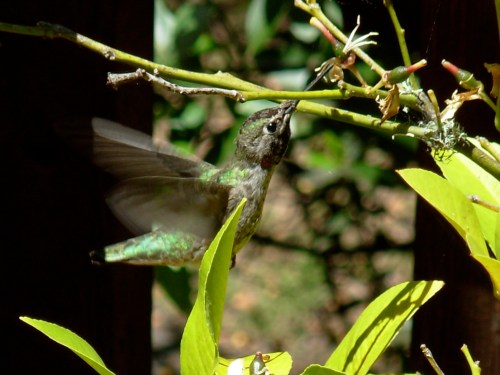
Some of the best moments for enjoying birds and butterflies occur during the fall, winter, and spring, even in cold climate zones. This can be when animals most need food and shelter. Watching animal activity, outside or even out a window, can brighten a gloomy day and encourage us to be better in tune with the cycles of nature, especially when we know we’re helping animals find food just when it can be hardest for them to do so. Plant a simple habitat garden with plants that attract birds and butterflies. Make and hang an easy bird feeder and watch the birds enjoy the eatery!
Grow Your Favorite Herbs
Take a page from French gardeners and employ your own potager –– a simple, accessible kitchen garden –– all year. Many herbs do very well in small indoor containers or on a kitchen windowsill. These include basil, chives, cilantro, scented geranium, parsley, sage, rosemary, thyme, and edible flowers. You can also grow lettuce indoors. Enjoy the simple act of growing and snipping a sprig of your herbs to add to a soup, a salad or a meal.
Preserve Food
The best preserved food is made from ingredients that are picked and canned or bottled at their peak of ripeness –– To open a jar and eat a spoonful of blueberry jam in mid-winter is to taste the summer in which it was made. Even Napoleon, not known for being the world’s most sensuous guy, seemed to understand this on a gut level. After all, it was he who offered an award for the person who could invent a way of preserving food for his armies. That, in turn, led to the modern practice of “canning”, making and preserving jams and other foods to eat all year long. If you still have berries, make my favorite triple berry jam. Berries gone? Then it’s time for yummy apple butter.
Jars of homemade jam make great gifts that recipients know are from your kitchen and your heart. Decorate the jars by tying on a custom gift card with a pretty ribbon. Or make a simple jar topper, which finishes a jar of jam in an especially old-fashioned and pleasing way. Instructions at the bottom of this post.

Preserve Memories with Your Family and in Your Home
Small items can have a lot of power. Did you collect sea shells, rocks, beach glass, trip souvenirs or other items? Have fun creating a display of them that you can enjoy all year long. Or make a mobile of your sea shells by poking holes into them with needles, stringing them on fishing line, and attaching the fishing line to sticks. Frame and hang a map from one of your favorite summer locales. Frame or make an album of vacation or summer photos and view them as a family on a winter’s day. Have family members share their favorite summer memories with one another. You may be surprised at everyone’s picks!
Gaze at the Stars
Even though summer’s Perseid meteor shower tends to get all the glory, fall and winter offer some of the best star shows of the year. If conditions are right, you’ll want to bundle up, make some hot chocolate, pull up a comfortable chair, and look through binoculars, a telescope, or the good ol’ naked eye at the Geminids, or the Leonids, or enjoy the marvelous constellations year-round.
Play Games
My summer memories often involve playing games. There seems to be more time in summer for family play, both indoors and out. Try to keep the lightness in your family and your schedule that allows for play. Play is vital for children’s development and family bonding, and is downright fun! Try these fun playground games.
Indoors? Have a family game night and play one of our favorite card games, Slapjack (instructions at the end of the post.)

Foster a Summer Mindset
In addition to warm weather, summer is often special because families approach the season with mindfulness and joy. Try unplugging or continuing to unplug earlier in the day and more often to create family time. Take walks in nature and play indoor and outdoor games, no matter the season. Keep the calendar as light as possible, even if it means saying “no” to some things or scheduling in family time. Treasure the small moments, which just may become big memories.
In the depth of winter, I finally learned that within me there lay an invincible summer.
–– Albert Camus

Mango Lassi
People in India and around Southeast Asia have been drinking lassis (pronounced “luh-sees”), sweet or spicy yogurt-based drinks, for thousands of years. And, with colorful lassi stands on streets all over the subcontinent, their popularity shows no sign of letting up. For good reason. This cooling drink is great after a spicy meal or on a hot day. It works as a breakfast or a dessert. The yogurt base (traditionally a dahi, which is closer to a curd) is said to enhance digestion. And the offering of a lassi is a gesture of friendship. Yes, all this from a drink.
1 c. plain yogurt
½ c. milk
1 c. frozen mango cubes, slightly thawed
1 Tbsp. sugar
¼ tsp. ground cardamom
dash of nutmeg, if desired
Note: the yogurt and milk can be full-fat, no-fat, or anything in between.
You can make this drink with one medium fresh mango and add ½ c. of crushed ice, if desired. You can also make a berry lassi by substituting frozen berries for the mango, or season the drink with cumin or mint.
Place all ingredients except nutmeg in a blender and puree for two minutes or until the mixture is smooth and any chunks of frozen mango are fairly small.
Pour into tall glass.
Shake nutmeg on top, if desired.
Serves 1
Hand Shadow Puppets
Rabbit – Make a fist with one hand. Place the other palm over it and make a peace sign (for ears) with two fingers.
Hawk – Link your thumbs together, with hands facing away from you. Stretch your fingers and hands and flutter them like wings.
Spider – Cross your hands at the wrist. Press your thumbs together to form the spider’s head. Wiggle your fingers in a climbing motion.
Wolf or Dog – Place your palms together, fingers facing away from you. Put your thumbs up to form ears. Let your pinky drop to form a mouth. Bend your index fingers to create a forehead.
Camel – Lift one arm. Hold your hand in a loosely curved position. Hold the pinky and ring finger together. Hold the other two fingers together, thumb pressed in. Curve both sets of fingers and hold them wide apart to form a mouth. Your arm, from the elbow up, will be the camel’s neck.
Jam Jar Topper
You’ll need:
Fabric pieces (fat quarters used for quilting work well)
Pinking shears or scissors
Rubber band
Ribbon (enough for the circumference of the lid, plus approx. 8”)
Glue, optional
Cut a circle of fabric, approx. ¾” larger all-around than the jar band.
If desired, place a dot of glue onto the top of the lid, and place the fabric onto it.
Secure the fabric with a rubber band.
Tie the ribbon around the rubber band to cover, and tie it into a bow.
Attach a gift card or jar label, if desired.
Slapjack
The Deal: Cards are all dealt, one at a time, to all players. It doesn’t matter if some players have more cards than others.
Object: To win all the cards, by being first to slap each jack as it is played to the center.
Players take turns lifting one card from his or her pile and placing it face up in a common pile at the center of the table. Players must be careful not to see their own cards first. Whenever a jack is turned, the first player to slap it takes all the cards in the common pile and places them in his or her own pile.
When more than one player slaps at a jack, the one whose hand is directly on top of the jack wins the pile. If a player slaps at any card in the center that is not a jack, he must give one card, face down, to the player of that card. When a player has no more cards left, he remains in the game until the next jack is turned. He may slap at the jack in an effort to get a new pile. If he fails to win that next pile, he is out of the game. Play continues until one player has won all the cards.
Other Slow Family posts you might like:
Back to School: 9 Tips for Taming Fall Frenzy
Seven Ways to Make Summer Last Longer
These activities are adapted from Fed Up with Frenzy: Slow Parenting in a Fast-Moving World, which contains 300+ more fun family activities.