Many parents worry about summer slide, the learning loss that can occur while school is out for the summer. Great news: There is a hotbed of learning right in your own backyard. Science, math, art, history, and early literacy can come alive through the kinds of rich, hands-on, project-based experiences that make learning meaningful, all while you’re having fun exploring outdoors.
(Read on for info about Galileo Camp and Natural Nester DIY Camp.)

Grow a Habitat Garden and Experience Citizen Science
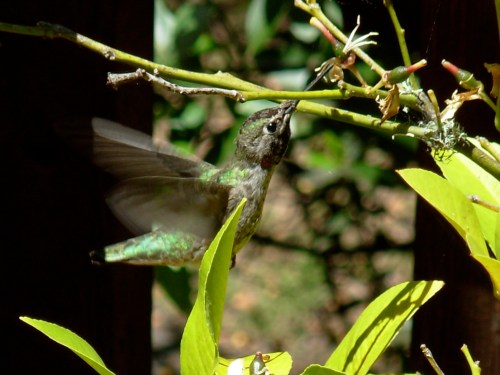
Small creatures like birds and butterflies are always fun to watch. There are lots of ways to encourage them to visit your garden and linger a while, many of which provide fun and fascinating projects while benefiting your local habitat, your garden and the greater ecosystem of the Earth. You don’t need a large yard to have a habitat garden. Apartment balconies, window ledges, school gardens, and decks can all host local habitat.
Backyard creatures essentially need four things: Food, water, shelter and places to lay eggs and care for their young. Learn more and find resources about habitat gardening. Welcoming wildlife needn’t be complicated. One very easy way to start is by making a bird feeder.
Want to take it a step farther? The Great Sunflower Project is just one of many opportunities for kids to experience citizen science close to home. Citizen scientists are ordinary people of all ages who help scientists and organizations track the count and behaviors of birds, butterflies, bees and others. After all, researchers can’t be everywhere, and many of us have habitats in our backyards and neighborhoods that can help them gain important information about nature. If you have 15 minutes, you can count bees, which are vital for the Earth’s ecosystem, for The Great Sunflower Project. Other projects available year-round allow you to track birds, bats, butterflies, fireflies, wildflowers, meteors and snow, learning about each in the process. See a list of citizen science projects.

Have Some Gardening Fun
Pizza Garden
You can grow just about everything needed for a pizza right in your own yard and then harvest and eat all the items baked in a pizza. All you’ll need to add is the dough and cheese! Pizza gardens teach design, planning, growing, harvesting, cooking and nutrition. Determine the shape of your pizza garden and decide what you’d like to grown and how you want to divide the space. Round pizza gardens, for instance, can be divided into four, six, or eight spokes, to resemble pizza slices. Mark off areas with string or rocks. Make sure to give plants like tomatoes plenty of room. In addition to tomatoes, try zucchini, eggplant, peppers, spinach, basil, oregano, onions, or garlic. Or grow flowers – red flowers to represent tomato sauce, yellow flowers to represent cheese, pink flowers for pepperoni, and some green leafy plants for spinach or peppers.
Seed Race
Why not make gardening into a game, and create a science experiment at the same time, with a seed race? Choose two or more types of seeds.
Plant them at the same time, in the same conditions, near each other in the ground or in similar containers, indoors or out. (Or plant the same seeds and vary one or more conditions as an experiment.) Water and watch which one emerges first and grows fastest. Stake them with a store-bought or homemade yardstick to measure their progress.
Growing Initials
Give your kids something they can claim as their own, and engage them in early literacy at the same time by planting seeds in the shape of a child’s initials. Lay string in the shapes of the letters you like and dig a shallow furrow beside it. Plant your seeds – leafy greens work well for this project because they come up quickly and fill out nicely. These include lettuce, chives, radishes, cress, and various grasses. Most greens have fine seeds, which can be planted in a close, continuous line and thinned as needed.
Saving Seeds
What better way for kids to learn about the process of seeds becoming plants than to collect, save, plant and grow their own seeds? Seed saving is fascinating, rewarding, frugal and fun!

Make a Wind Chime or Music Tree
Kids love to make music and noise. What better place for that than outdoors? Hang old or recycled pots, pans, tin cans, lids, muffin tins, silverware, measuring cups and other items from tree branches. Group lighter items close together to create wind chimes, or place them farther apart to let kids make music with wooden spoons to experiment with different sounds or learn about the effects of wind.
Have Fun with Water
Outdoor time calls for water play, which allows even the youngest children to learn about the properties of water, as it allows things to float, sink, fill, empty, change textures and temperatures, and move at various speeds. Young children will enjoy a mud play area and lots of old cups and kitchen items for filling, scooping and dumping. Others may enjoy filling cups with water and making “magic potions” with food coloring, glitter and small found objects. Or fill a tub of water and make a fine sea-worthy vessel to play with.
Cork Rafts and Sailboats
You’ll need:
Corks
School or craft glue
Flat toothpicks
Construction or other paper
Ruler
Markers, crayons, or colored pencils
Scissors
Raft: Arrange corks in a square or rectangle, with long sides touching each other. Glue the sides of the corks together. Draw a small rectangle (approximately 1 x 4”) on the paper with the ruler and cut it out. Fold the paper in half, so that you have two rectangles approximately 1 x 2”. Draw your country’s flag, or flags from your imagination, on each outer side of the paper. Glue the toothpick into the inner fold on the back side between the two flags, and let the glue dry. Glue the two halves of the paper together to secure the flag. Affix the toothpick flags into one cork or several corks and set the raft in water.
Sailboat: Glue corks together, following the instructions for the raft, or simply use a single cork. Draw a triangular sail shape on the paper (approximately 1” long on the side that will be glued to the toothpick. Decorate your sail, if desired. Glue the sail to the toothpick on its 1” side and let the glue dry. Affix the toothpick sail into the cork or cork base and set sail!
Elementary and older children will enjoy making a paper boat and sailing it in a nearby body of water, alone or in a race with others.

Create Garden Art
Artists and craftspeople have long been inspired by the garden. Just getting outside with art and craft materials can open a world of wonder and observation. Gardens, in all their color, variety and changing light, offer great subjects, as well as a place to clear the artist’s head. In addition, they often provide a place where one can get messier than inside a house. Bring tempera or finger paints and paper outside, for plein air painting, paint a flower pot that you can plant in, or make a pretty beaded spider web.

Blow Bubbles
Bubble blowing may be one of life’s perfect activities. While providing endless possibilities and inexpensive fun, bubbles also illustrate properties of science. Each one is a thin skin of liquid surrounding a gas. The water molecules on their surfaces bond tightly together, because each is made up of two sticky hydrogen atoms and one oxygen one – H2O. More bubble science is explained here. Bubbles can be made using ingredients you have around the house. When the weather’s nice, I often make a bucket of bubble solution and leave it outside with wands and other fun equipment so my daughter and friends can make bubbles whenever they like. It’s always fun and magical to create bubbles and watch them trail in the breeze. Here’s a recipe for giant homemade bubbles and some fun bubble activities.

Play Web of Life
This is a powerful group game that teaches older children about the interconnectedness of living things. We encountered it on a school field trip to a vibrant marsh and have never forgotten it.
You’ll need:
A ball of string, yarn, or twine
Players form a circle. The leader asks them to name a plant or animal that lives in the area. When someone names a plant or animal, he or she is handed the end of the ball of string. When someone names another plant or animal, the string is unraveled and handed to that person. The game continues this way until everyone is holding the same piece of string. It can be very dramatic for everyone to realize that they are webbed together. Choose one of the players to illustrate what happens when there is change, such as when a tree burns down or an animal is eaten. Have that person pull his or her piece of string to see its effect on all the others.
Slow Tip: If people get stuck on what to say next, go backward or forward in the food and shelter chain. The bird eats a frog, the frog eats an ant, the ant crawls under a tree, the tree provides oxygen for the deer, and so on.
Cook with the Sun
Box ovens employ one of the oldest energy sources of all, solar power. But while people have dried food in the sun for centuries, it was French-Swiss scientist Horace de Saussure who harnessed it for cooking. He used glass to trap heat and create convection while his 1700s peers were still burning mirrors. Anything that can be cooked in a regular oven can be cooked in a box oven, though it’s best to stick with recipes that don’t require raw meat or eggs, until you’re proficient.
You’ll need:
Large sturdy cardboard box, with four sides and a bottom (no top or lids), such as a 10-ream paper box
Heavy-duty aluminum foil
Duct tape
Cookie sheet or large cake pan
4 tin cans, filled with water to weight them
Charcoal briquettes and fire starter
Disposable foil tray or pie tins
Small stone
Recipe and cooking items
Bucket of water for fire safety
Choose a hot day with full sun. Completely line the box inside and out with foil, shiny side out. Tape only on the outside of the box (to avoid fumes getting in the food.) Choose a flat surface away from flammable objects. Line it with foil. Use the tin cans as “feet” to hold the cookie sheet or cake pan, which serves as the oven tray. Fill the foil tray or pie tins with briquettes, approx. one for every 40 degrees of desired oven temperature, and start. Place the item to be cooked on the oven tray (ideas follow). Slide the briquettes under the oven tray when ready (white). Place the box oven down over the items, using a small rock on the least windy side to lift part of the box off the ground for ventilation.
Follow the directions for your recipe. Cupcakes, biscuits, English muffin pizzas, and other items that don’t require long cooking times all work well in box ovens. Try one of our favorites:
Box Oven Pineapple Upside Down Cake
You’ll need:
2 boxes yellow cake mix, prepared
1 ounce butter or margarine
1 8-ounce can of pineapples
½ cup brown sugar
Dutch oven or large cake pan
Second pan or cookie sheet
Place butter or margarine in the Dutch oven or pan and melt it in the box oven. Stir brown sugar and pineapples into the melted butter. Pour prepared cake mix over the pineapple mixture. Bake for 25 minutes or more, until the cake is golden brown. Remove from the box oven and invert onto a second pan or cookie sheet.
Slow Tip: Want to try some super easy sun cooking? Make sun tea by filling a container with water, adding tea bags, and letting the container steep in the sun.

Enjoy the Night Sky
Backyard fun needn’t only happen during the daytime. Nighttime offers lots of opportunities to explore constellations of stars; meteor showers, like August’s Perseids; or phases of the moon. You can’t help but be infused with a sense of wonder, awe, history and mystery while contemplating the cosmos, as countless people, back to the ancient Babylonians, Egyptians, Greeks and others have done before us.
Get to Know the Constellations
With 88 constellations and numerous other stars, the night sky can seem a bit overwhelming. Begin to get to know it by locating a few key constellations and orienting to those. After all, the constellations were themselves created to help the ancients better understand the night sky.
The Big Dipper, which is part of a larger constellation, is a great starting point, as it has an identifiable shape and is usually visible over much of the Northern Hemisphere. It appears like a ladle (bowl) and handle. Seeking the North Star, or Polaris? Extend an imaginary line up from the top corner of the ladle that is furthest from the handle. Polaris is in turn on the handle of the Little Dipper, which appears upside down and facing the opposite direction from the Big Dipper. Continue on from the North Star, away from the Big Dipper, for about the same distance and you will reach Casseopeia (the mythical Queen of Ethiopia), another famous constellation. In the Northern Hemisphere, Cassiopeia is shaped like an “M” in the Summer and a “W” in the Winter.
Consult a star map and continue to find relationships to these constellations.
Slow Snippet: What makes stars twinkle? What we see as twinkling is really the light from the star bending as it moves through layers of the Earth’s atmosphere. That trip takes billions of years, so that what we see is a snapshot of a time in the cosmos that is long past.
Keep a Moon Diary
Taking note of the moon’s phases and rhythms, as it moves through its cycle, is a great way to feel the rhythms of our lives and of nature. Observing the moon and keeping a moon diary can help younger children understand how long a month is.

Have a Scavenger Hunt
Scavenger hunts are a great way to get everyone exploring and observing in nature.
You’ll need:
Pencils and paper
Create a list in advance or have players contribute to one list of 10-20 things they might find in the backyard or park. A list might include an oak tree, a pond, a red bird, a dandelion, a wildflower, a nest, a feather, an acorn or a hollow log. You or the hunters could also list more subjective items, such as something rough, something orange, something unexpected, or a heart-shaped rock. Teams or players go off to seek the items on the list and cross each off when they see it. One point is awarded for each item found. The person or team with the most points wins.
Make a Nature Bracelet
This is a fun and easy way to get kids to look around them and observe small items in their own backyards.
You’ll need:
1″ or wider Masking Tape, enough to go around each child’s wrist
Tear off a piece of masking tape, slightly larger than the child’s wrist. Place it around the wrist with the sticky side out. Go for a walk or hunt and look for small items in nature that can be stuck to the masking tape, such as leaves, twigs, seeds, acorns and pods. (Generally things that have already fallen on the ground are safe to pick. If in doubt, leave something.) Fill the bracelet by sticking the items onto it and wear it proudly.

These activities are adapted from Fed Up with Frenzy: Slow Parenting in a Fast-Moving World, which contains 300+ more fun family activities.
Want to take it further? Create your own backyard DIY summer camp with eight weeks of ideas from A Natural Nester and many others.
San Francisco Bay Area parents, want to find a camp that inspires summer learning and fun? Check out Galileo Camps, with over 40 Bay Area locations. Use code: 2014INNOVATION for $30 off.
This post is part of the School’s Out Top 10 Summer Learning series. Be sure to read all the other great Top 10 lists!

Thanks to our sponsor, Galileo Learning.
Photos: Susan Sachs Lipman, Kids Growing Strong (pizza garden), Public Domain (night sky), Pass the Cereal (nature bracelet)